B-70,Surya Nagar,Near LIC Office Meerut, UP -250001
Call Anytime
+91-9759923706
Call Anytime
+91-9759923706
Data Analysis
Make Better Decisions With Your Data
Turn Data Into Meaningful Business Insights
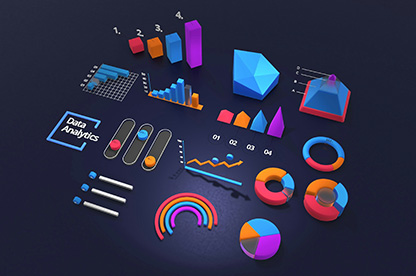
In the IT industry,Data Analysisis the process of collecting, cleaning, transforming, and modeling data to discover useful information, gain insights, and support decision-making.
Think of it as acting like a detective for a company's digital footprint. IT systems generate massive amounts of data every second (user logs, transaction records, website traffic, server performance). Data analysts step in to turn that raw, chaotic data into a clear story that business leaders can use to make smarter moves.
The Data Analysis Process
Data analysis isn't just about looking at a spreadsheet; it follows a structured lifecycle:
Requirement Gathering
Understanding what business problem needs to be solved (e.g., "Why are users dropping off from our checkout page?").
Data Collection
Gathering raw data from various sources like databases, web scraping, log files, or APIs.
Data Cleaning (Wrangling)
This is often where analysts spend 70% of their time. It involves removing duplicates, fixing errors, and handling missing data so the analysis is accurate.
Data Analysis
Exploring the clean data using statistical tools and techniques to find patterns, trends, or anomalies.
Data Visualization & Reporting
Translating complex findings into easy-to-understand charts, dashboards, and reports using visual tools.
Contact us
Write Email
The 4 Main Types of Data Analysis
Depending on the goal, an IT data analyst will use one of four primary approaches
Descriptive Analysis
Explains what happened by summarizing historical data through reports, dashboards, charts, and statistics.
Diagnostic Analysis
Explains why something happened by identifying patterns, relationships, and possible causes within the data.
Predictive Analysis
Estimates what is likely to happen next by using historical data, statistical models, and machine learning techniques.
Prescriptive Analysis
Recommends what should be done by analyzing possible actions and their potential outcomes to support better decision-making.
Why is it so important in IT?
Data analysis is the backbone of modern business strategy. Without it, companies are just guessing. It helps organizations
Improve Customer Experience
By analyzing how users interact with software or apps, IT teams can fix bugs and design better user interfaces.
Optimize Operations
IT companies use data to monitor network traffic, predict server failures, and allocate cloud resources efficiently.
Drive Revenue
E-commerce and streaming giants (like Amazon and Netflix) analyze user data to recommend products and shows, directly boosting sales.
Frequently Asked Questions
What is Data Analysis, and how does it benefit businesses?
Data Analysis involves examining raw data to extract valuable insights. It benefits businesses by providing actionable intelligence for informed decision-making, strategic planning, and improved performance.
Mr Harold Deonarine, Founder/Owner
This company is excellent company for Digital Marketing. I recommend indiaonlinemarketing.com as a very professional company to do business with.
Mr Chris Bruce, President
Indian Online Marketing is an excellent company for internet marketing,search engine optimization,social media marketing & pay-per click campaign management with superlative work, from concept to final input.I recommend this company for Digital Marketing.
Mr Lee Benham, Founder/CEO
Mr Naveen Pal is a very professional person I have worked with.We are very satisfied with his team work.We highly recommend his company for Internet Marketing.Hope to work with this company again in future.
Mr. Neil Mann, CEO
Indian Online Marketing is a best company for Digital Marketing works well with colleagues and clients.Punctual at each step of the process having inventive, out-of-the-box ideas and implementation.
Mr Emeka Nwankwo, President
Indian Online Marketing is a detailed oriented service provider with customer friendly attitude and works excellently at a reasonable cost.We will work with this company again.Highly recommended. Thanks.