
AI Media Buying: Can You Leave Your Ad Budget to the Machine?
Introduction: Why AI Media Buying Is Rising in 2025
The media buying landscape has experienced a paradigm shift in 2025 with AI-powered media buying taking center stage in digital marketing. What was once the simple automated bidding solution has grown into advanced, self-improving systems that control billions in ad spend on global platforms.
The rate of adoption speaks for itself:
78% of advertisers currently employ some type of AI-powered bidding (Google Ads 2025 Report)
AI-automated campaigns achieve 32% improved ROAS on average (Meta Q2 2025 Benchmark)
63% of CMOs identify AI optimization as their primary digital priority (Gartner CMO Survey)
This revolution is driven by the fact that AI can analyze thousands of data points in milliseconds - from micro-moments in consumer behavior to macroeconomic trends impacting purchase intent. When human teams may take days to recalibrate strategies, AI systems respond in real-time to:
Swings in competitive activity
Shifts in inventory levels
New audience trends
Platform algorithm changes
But with great power, great responsibility. With more brands outsourcing budget control to technology, tough questions arise over transparency, brand safety, and the loss of marketing instinct.
How Algorithmic Bidding Works: A Simple Explanation for Marketers
The AI bidding systems in use today are built on neural networks that learn and update themselves continuously. Let's unwrap exactly how they work:
The Data Input Layer:
Historical campaign performance (last 90-180 days ideal)
Real-time user signals (device, location, browsing history)
External (weather, news, stock market)
Competitive (auction pressure, density of bids)
The Decision-Making Process:
Predictive Scoring: AI assigns a conversion probability to every impression opportunity
Value Assessment: Computes expected return on your KPIs (CPA, ROAS, etc.)
Bid Adjustment: Dynamically adjusts bids between $0.01 and max budget
Post-Bid Learning: Compares results to improve future predictions
Platform Differences:
Google Smart Bidding: Concentrates on search intent signals and cross-device behavior
Meta Advantage+: Uses social engagement patterns and lookalike modeling
Amazon Demand-Side Platform: Focuses on purchase history and cart abandonment
Key insight: These platforms require a minimum of 15-30 weekly conversion events to optimize properly. Low-volume campaigns tend to do better with manual management.
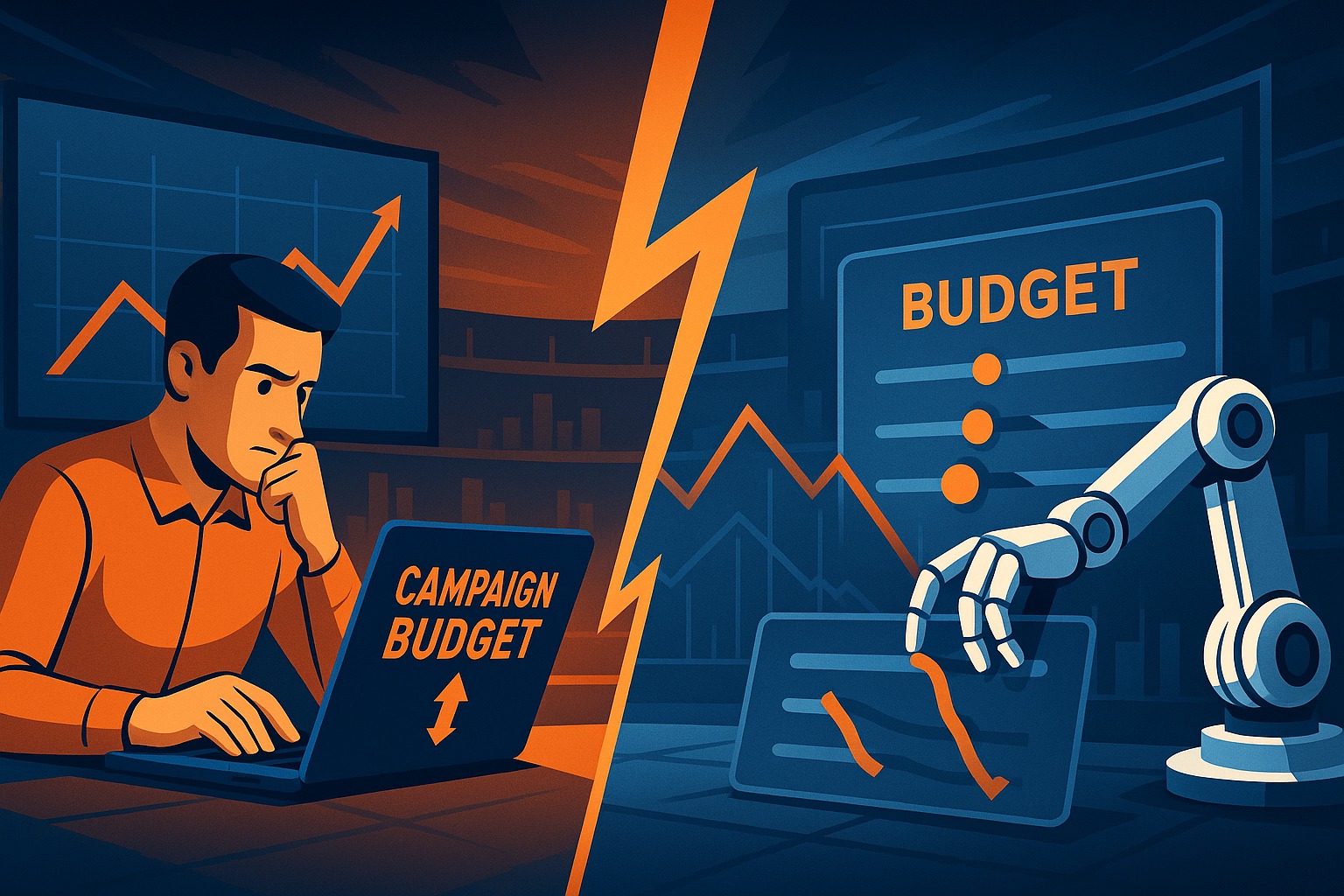
AI vs. Human: Who Decides Better on Budget?
It's not a question of replacement, but rather best-in-class collaboration. Here's how capabilities stack up:
Where AI Excels:
Micro-Decision Speed: Bids 10,000+ auctions per second
Pattern Recognition: Identifies non-linear trends (e.g., users who surf between 2-3 AM convert 47% more effectively)
Fatigue Avoidance: Never tires or misses late-night performance bumps
Where Humans Excel:
Strategic Foresight: Foresees market trends before data catches up
Creative Judgment: Cares about emotional connection beyond clickthrough metrics
Ethical Safeguarding: Staves off brand misalignment in sensitive spaces
Real-World Performance Data:
For DR campaigns below $50k/month: AI posts 18-25% improved efficiency
For brand campaigns and launches: Human-driven strategies register 32% higher recall
Hybrid solutions (AI execution + human planning) deliver optimal performance
The sweet spot is found when marketers:
Let AI manage tactical bid tweaking
Save human judgment for:
Budget allocation by campaigns
Creative testing frameworks
Long-term brand positioning
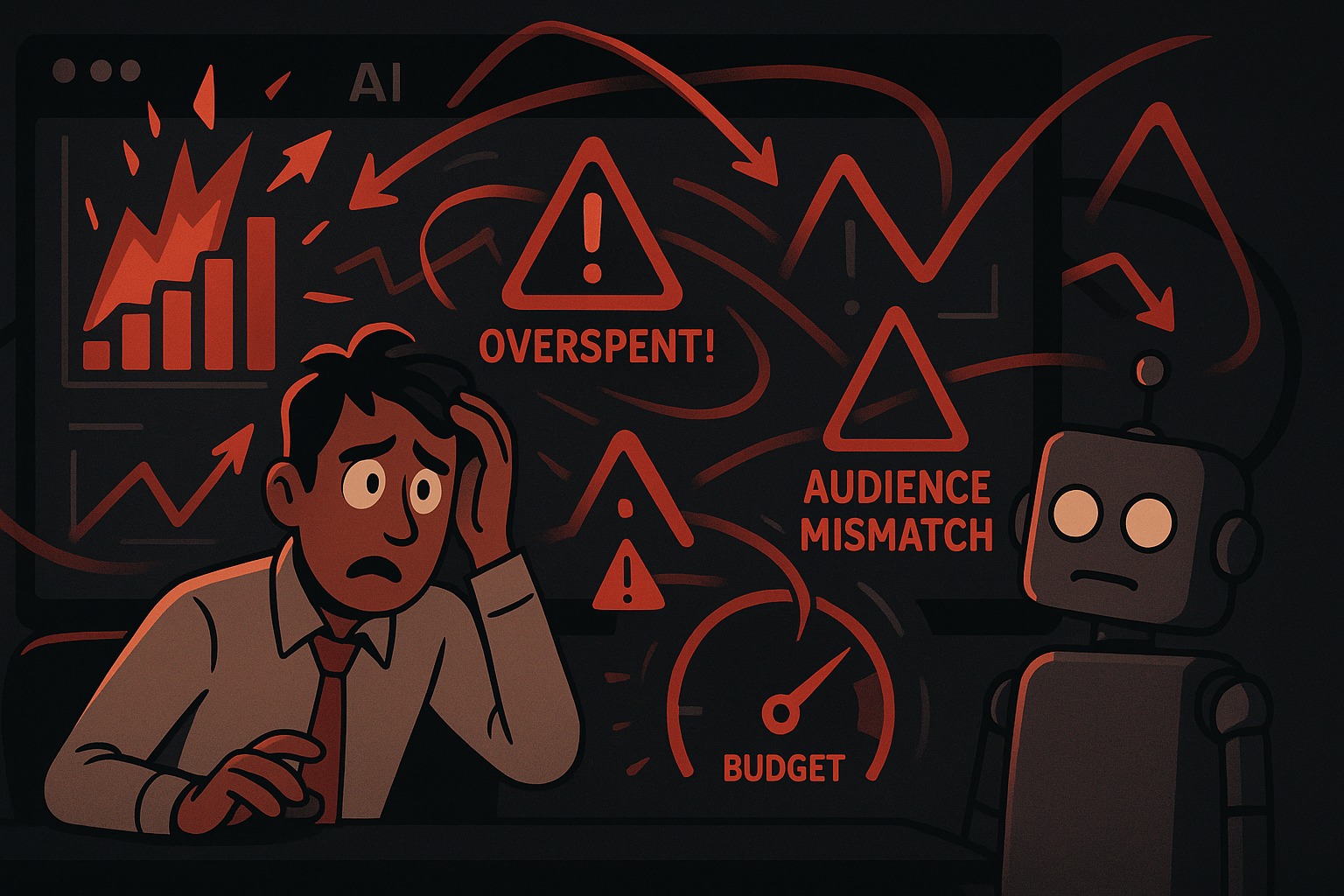
The Risks of Over-Automation: What Marketers Should Watch Out For
A lot of brands find out the hard way that "set it and forget it" doesn't apply to AI buying. These are the most typical pitfalls:
Users who are already familiar with your brand
Low-funnel activity at the cost of awareness
Easy conversions with minimal lifetime value
Over-showing highest-performing ad variations to the point of fatigue
Overlooking new creative formats that require time to scale
Missing nuanced brand misalignments in automated placement
Bot traffic warping conversion signals
Seasonality patterns being misinterpreted as new norms
Platform updates (such as iOS updates) that need to be manually recalibrated
Red Flags Your AI Needs Supervision:
Impression share decreasing despite higher spend
Increasing CPAs without any obvious external reason
Conversions above 80% from repeat customers
Greater than 15% of spend to suspicious placements
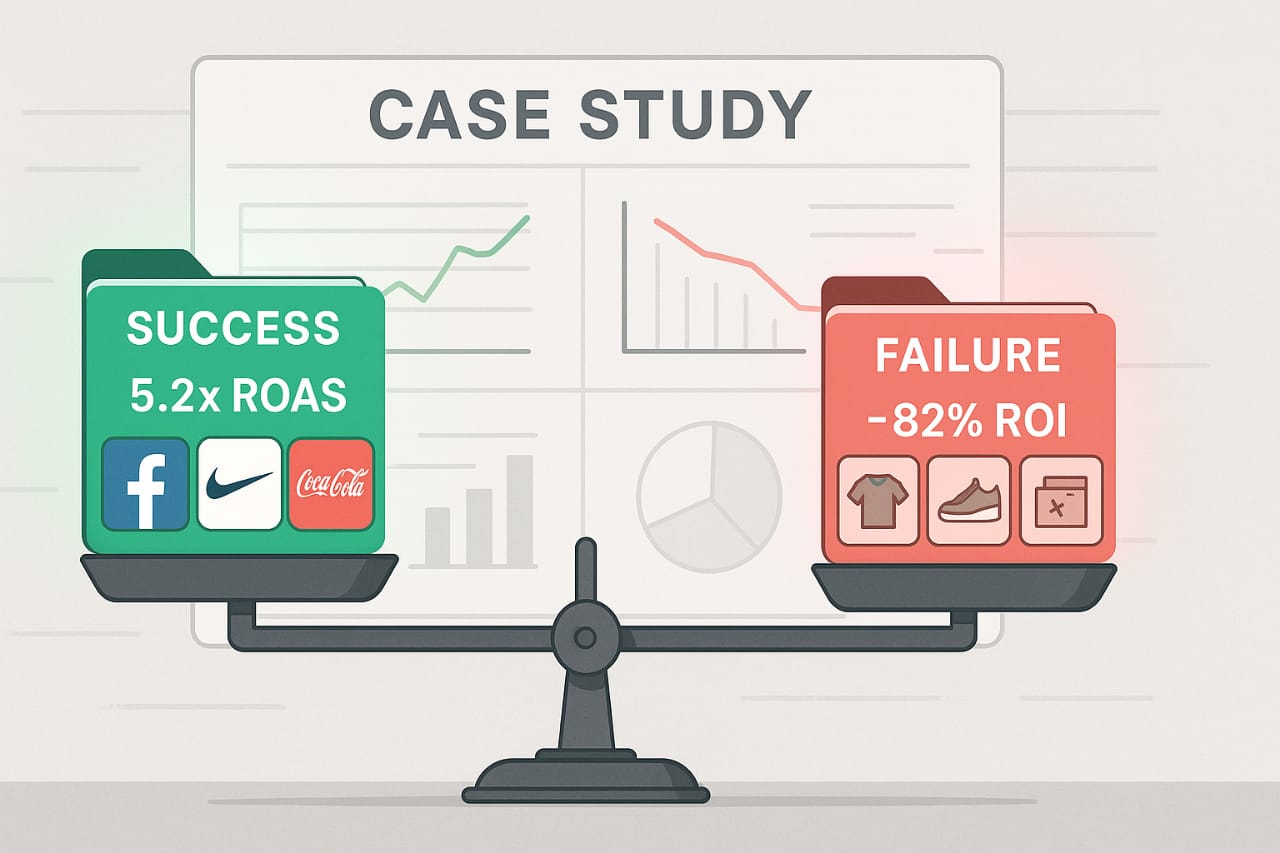
Real-World Case Studies: Brands That Scored (and Flipped) with AI Media Buying
The Home Run: Luxury Travel Brand + Performance Max
Challenge: Had to restore high-value travel bookings post-pandemic
AI Implementation:
Fed previous customer CRM data into PMax
Optimized value-based bidding targeting $5k+ packages
Enabled mass audience growth with creative restrictions
Results:
142% ROAS improvement within 6 months
Uncovered 3 new high-value audience groups
Shortened sales cycle by 22 days by improved timing
The Cautionary Tale: DTC Skincare + Meta Advantage+
Mistake: Fully automated without accurate conversion tracking
What Went Wrong:
AI maxed for "complete registration" events (low-value but easy)
Blowed budget on young users who aren't likely to buy
Missed high-LTV customers that needed to be nurtured
Recovery:
Applied offline conversion tracking
Inset manual audience exclusions
Combined AI bidding with human-curated audiences
Result: CPA fell 58% in 8 weeks
Key Takeaways From These Cases
AI requires quality conversion data to perform well
Brand limits and business rules are absolute non-negotiables
Optimal results result from iterative human-AI collaboration
How to Audit AI Decisions: Tips to Take Control of Your Ad Spend
Auto-running campaigns using AI doesn't mean you should let them go on autopilot. Regularly auditing them will make sure that your budget is being used optimally. Here's how you can remain in control:
Review Conversion Paths – Make sure AI isn't prioritizing last-click conversions over higher-funnel touchpoints.
Analyze Bid Adjustments – Are you bidding too aggressively on low-intent users? Set bid caps where appropriate.
Quality Placement Monitoring – Make sure ads aren't showing on non-relevant or spam websites.
AI vs. Manual Segments Comparison – Conduct A/B tests to determine if human-curated audiences perform better than AI suggestions.
For instance, a DTC company realized their Google Smart Bidding was over-spending on mobile traffic with high bounce rates. By blocking under-performing devices, they cut wasted spend by 22%.
The Role of First-Party Data in Smarter Automated Bidding
AI is only as good as the data it's fed. First-party data (email lists, past purchasers, CRM insights) helps algorithms make better decisions by:
Improving Audience Targeting – AI can prioritize lookalikes of your best customers.
Reducing Ad Waste – Excluding existing customers from prospecting campaigns.
Enhancing Personalization – Dynamic ads perform better when AI knows user history.
A 2025 Meta case study showed that brands using custom audiences from CRM data saw a 30% lower CPA than those relying only on broad interest targeting.
When (and Why) Manual Bidding Still Outperforms Automation
Despite AI's advancements, there are cases where human control works better:
Niche Industries – Low search volume keywords need manual adjustments.
Brand-Launch Periods – AI needs historical data; early campaigns may require manual bids.
High-Value Conversions – Human judgment is frequently required for complex sales (B2B, luxury).
As an example, a B2B software business determined that manual bidding on LinkedIn outperformed automated campaigns by 40% in lead quality, as AI lacked the ability to measure intent in long sales cycles.
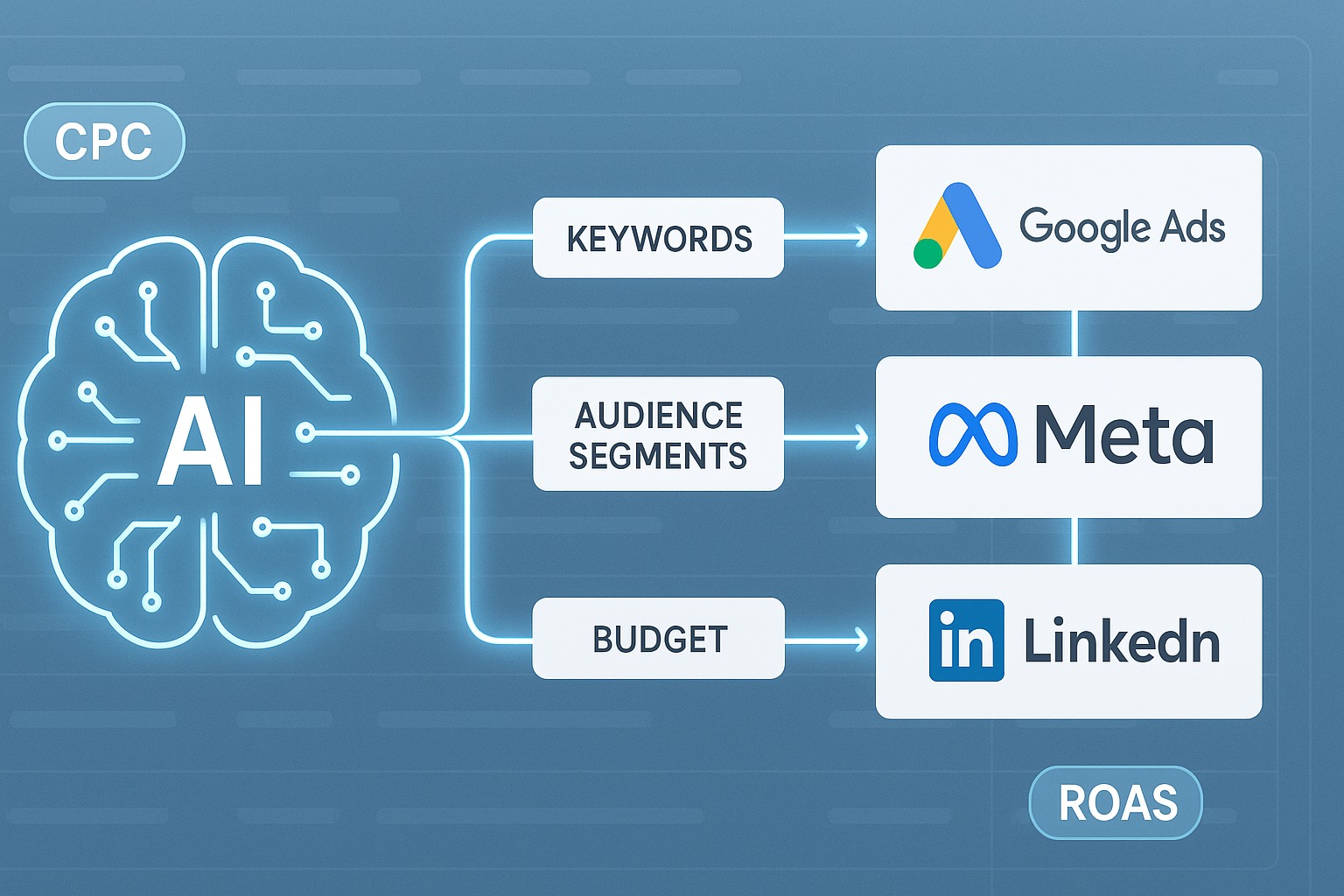
Top Tools in 2025 for AI-Driven Campaign Management
Not all AI tools are created equal. These are the most reliable platforms this year:
Google Performance Max – Ideal for cross-channel automation.
Meta Advantage+ – Organizes placements on Facebook & Instagram.
Marin Software – Search & social unified bidding.
Skai (formerly Kenshoo) – AI-driven retail & performance campaigns.
Adobe Advertising Cloud – Sophisticated analytics for enterprise brands.
All of them have their strengths—PMax is excellent at Google Ads, and Marin works well for scaling across multiple platforms.
Conclusion: Should You Trust AI with Your Ad Budget? Final Thoughts
AI media buying is a force multiplier, not a human replacement. The optimal plan in 2025?
Leverage AI for productivity – Allow it to perform bid optimizations and real-time adjustments.
Leave humans in the loop – Periodically review performance and rebalance strategy.
Pair automation with first-party data – Enhances targeting precision.
Know when to switch to manual – High-risk campaigns might require having complete control.
Those who blindly rely on AI are at risk of lost spend, while those who micromanage risk sacrificing scalability. The key strategy? An harmonious data-driven collaboration between man and machine.

 Indian Online Marketing Team
Aug 10, 2025
 Indian Online Marketing Team
Aug 24, 2023
 Indian Online Marketing Team
Aug 24, 2023
 Indian Online Marketing Team
Aug 24, 2023
 Indian Online Marketing Team
Aug 24, 2023