
Ethical AI: Why Transparency Is Now a Competitive Advantage
Ethical AI: Why Transparency Is Now a Competitive Advantage
1. Introduction: The New Era of AI Ethics in Business
We are in a time when artificial intelligence is no longer an otherworldly buzzword — it underlies everything from search engines and virtual assistants to credit approvals and personalized recommendations. But as AI technology becomes increasingly embedded in everyday life, the public's attention has turned up. Customers, regulators, and even workers are pressing tough questions: How was this AI created? Is it ethical? Does it hold my privacy dear? Under these circumstances, firms can no longer keep ethics as an afterthought. Ethical AI, and transparency in particular, is now a new cornerstone of business reputation, as essential to brand value as quality or customer service were.
2. What Does "Ethical AI" Really Mean? 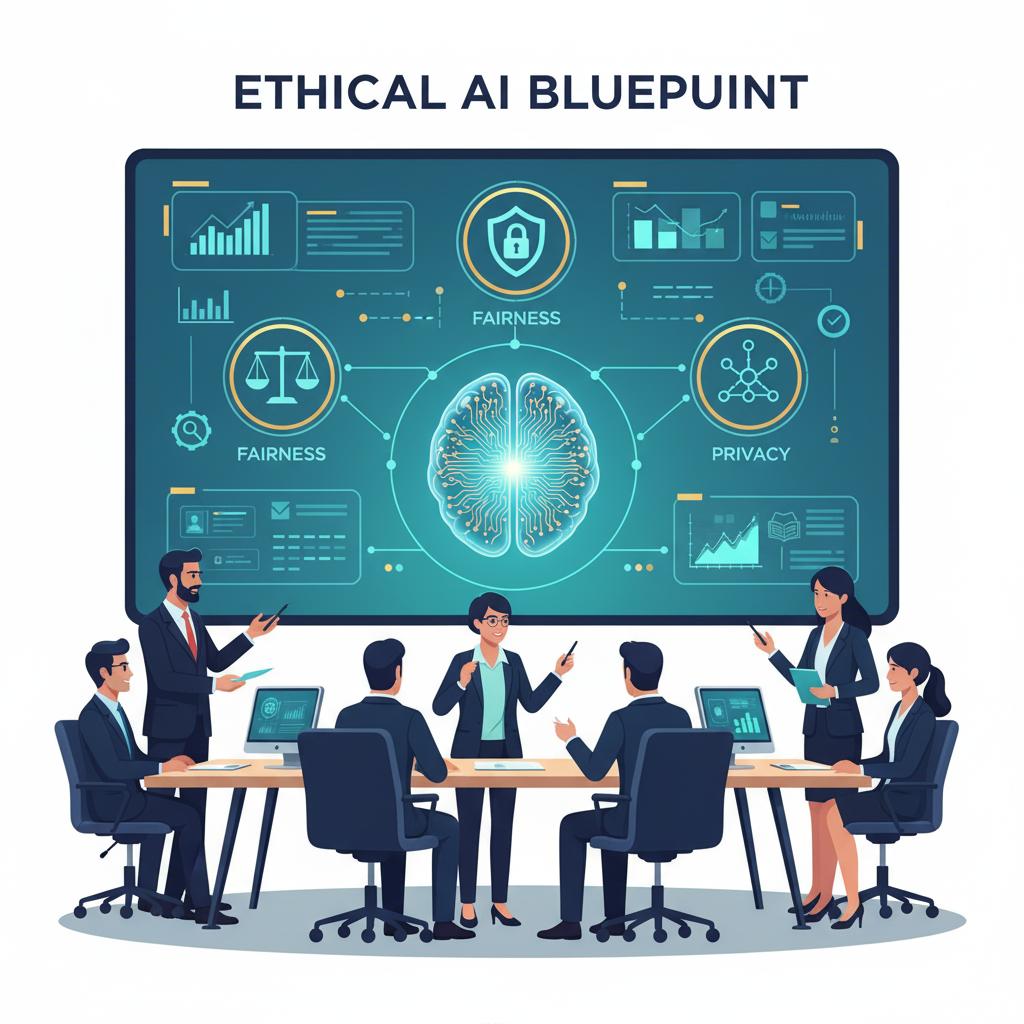
Ethical AI isn't about ticking a single box; it's a philosophy and collection of practices that steer the way algorithms are written, trained, deployed and regulated. It encompasses fairness (minimizing bias), accountability (keeping track of who's accountable when something happens), explainability (making it easier to understand complex models), and privacy (preserving sensitive information). Simply put, ethical AI is about incorporating trustworthiness into technology's DNA. For a business, advocating for ethical AI entails taking active measures to ensure that each phase — from data gathering to model output — is in line with expressed values and legal requirements. This is no longer optional: it's a baseline expectation from customers, regulators and investors.

3. Why Transparency Is The Heart of Trust in AI
Transparency is the most visible and most potent element of ethical AI. When individuals understand how a system functions — even at a high level — their willingness to use it skyrockets. Picture two fintech apps: one explains precisely how your credit score is computed and why you were accepted or rejected, the other provides a "black box" verdict. Which will customers trust? Transparency demystifies algorithms, pushes back against misinformation, and makes customers feel respected instead of manipulated. It also provides companies an opportunity to show the strength of their technology instead of covering behind vague assertions.
4. The Business Risks of Opaque Algorithms
The reverse of transparency is opacity — and opacity poses tremendous risks. Black-box AI systems can generate discriminatory results, unfairly deny services, or even violate laws before a company even knows it's happening. Each week there are new stories of brands under attack or in court because their AI acted in ways they couldn't articulate. This not only harms reputation but also undermines customer loyalty, encourages regulatory fines, and lowers share prices. In short, opacity is costly. Transparent AI, on the other hand, works like insurance: it lowers the chances of scandals, speeds up compliance, and makes stakeholder trust stronger.
5. How Transparent AI Builds Consumer Confidence
Consumers are much more sophisticated today than they were even five years back. They investigate, they compare, they read reviews, and more and more, they want to know not only what something does, but how it does it. Transparent AI provides them with that certainty. Revealing customers the data sources, the model logic, or human oversight that goes into an algorithm transforms suspicion into gratitude. This is particularly important in the sensitive areas of finance, healthcare, and recruitment, where a decision can alter lives. When individuals feel your AI is understandable, transparent, and respectful of their rights, they are more likely to embrace it, share it, and remain loyal to your brand in the long run.
6. Regulations and Global Standards Driving AI Transparency
Transparency is more than a nice-to-have — it's a legal need-to-have. The EU's AI Act, the U.S. FTC's AI guidelines, India's Digital Personal Data Protection Act, and several industry standards (ISO/IEC AI Management Systems, NIST AI Risk Framework) all lead to the same place: businesses will be held responsible for how their AI performs. Failure to comply may result in fines, lawsuits, and being barred from profitable markets. Meanwhile, being out in front on transparency makes your brand a leader, not a laggard. It signals to customers, partners and investors that you’re not only innovative but also responsible and trustworthy.
7. Case Studies: Companies Winning with Ethical AI
Across industries, the most forward-thinking companies are no longer treating ethical AI as a PR exercise but as a core strategic lever that fuels measurable growth. In Europe, for example, one of the top digital banks started making its credit-scoring criteria transparent in simple language, so even nontechnical customers would know why they were approved or rejected. This radical transparency eliminated fear, boosted applications by double digits, and reduced customer-support calls by half because individuals at last trusted the process. In Asia, a health-tech company integrated an "Explain this decision" button within its diagnostic software, displaying to patients the specific signs and symptoms the AI looked at before recommending treatment. One feature alone converted doubtful doctors into evangelistic champions and opened up hospital contracts that had been pursued for years by competitors. These examples show that transparency isn't a nice-to-have extra; it's an entry barrier competitors can't easily replicate, because genuine trust is established through consistent behaviour, not slogans.

8. Transparency as a Differentiator in Crowded Markets
The majority of markets employing AI — from HR filtering and fintech underwriting through to retail personalization — are crowded with products which look, feel and cost the same. In that noise, respect for the customer's autonomy is the new currency. If a brand openly shares how its AI models are trained, from which data sources, how it addresses biases, and how a user may appeal or challenge an outcome, it conveys respect for the customer's autonomy. That is more compelling than features or coupons. Shoppers who feel in the know are ones who become loud and proud champions who fuel organic expansion; regulators who experience a culture of transparency will approve more rapidly; and potential partners assume less risk and more brand value. That is, transparency emerges as a multi-faceted differentiator — it influences marketing, legal and regulatory compliance, recruitment and even investor sentiment.
9. Weaving Ethical Practices Into Your AI Development Process
Sincere transparency cannot be added on after the fact during finished development; it has to be designed into each step. This entails establishing ethical standards at concept time, establishing data-governance protocols prior to the collection of the first dataset, having cross-functional reviewers (law, diversity, product, UX) participate in model training, and logging each decision as strictly as you log code. Top organisations today conduct "algorithmic impact assessments" akin to financial audits, grading their systems on bias, fairness and explainability prior to release. This practice not only minimises regulation and reputation risk but also enhances model quality by catching edge cases early. If ethical practices become muscle memory within teams, transparency ceases to be a marketing slogan and becomes a verifiable attribute of the product.

10. How to Communicate AI Transparency to Customers
Even the most transparent system fails if customers cannot perceive that transparency. The challenge is to translate technical openness into user-friendly communication. This can be done through layered disclosures where simple explanations are on the surface and clickable deep dives are available for those interested; plain-language FAQs describing the purpose, constraints and data sources of each model; and graphic "AI nutrition labels" inspired by food packages, summarizing data origins, intended use cases and known biases. Some providers provide real-time dashboards so that customers can view which of their inputs are being handled and for what reason. These approaches turn transparency from a theoretical compliance process into a concrete, comforting experience that bolsters allegiance in each interaction.
11. Balancing Innovation, Privacy, and Accountability
Executives are concerned that exposing too much information about an AI system will reveal intellectual property or dilute product cycles. In reality, privacy-by-design and accountability-by-design speed up innovation instead of slowing it down. Clean data pipelines, unobstructed audit trails and role-based access controls minimize developer friction and simplify debugging. Openly discussing principles while keeping proprietary algorithms confidential meets the balance between being trusted and maintaining trade secrets. Firms that excel at this balance build reputations as "innovators with integrity," a reputation that enables them to recruit best engineering talent, high-end partners and long-term investors — advantages that stealthy rivals often cannot match.
12. Future Outlook: The Competitive Advantage of Open AI by 2030
Transparency will become a market entry requirement rather than a differentiator by the end of this decade. Customers are already expecting evidence of sustainability, fair labor and data protection; next they will expect algorithmic scorecards, bias audits and explanation rights as a prerequisite to the use of a product. Regulators on every continent are writing rules that will mandate explainability, consent and auditability for any AI impacting citizens' rights. Firms that invest in transparent systems now will have the culture, infrastructure and brand integrity to thrive there — effectively "compounding trust" in the manner banks compound interest. Others will postpone and rush under duress, wasting money to retrofit transparency and forgoing first-mover benefits. Ethical AI is therefore not simply a matter of doing the right thing, but also future-proofing your competitive advantage in the trust economy.

 Indian Online Marketing Team
Aug 10, 2025
 Indian Online Marketing Team
Aug 24, 2023
 Indian Online Marketing Team
Aug 24, 2023
 Indian Online Marketing Team
Aug 24, 2023
 Indian Online Marketing Team
Aug 24, 2023