
How Generative AI Is Revolutionizing Code Reviews and Bug Fixing
How Generative AI Is Revolutionizing Code Reviews and Bug Fixing
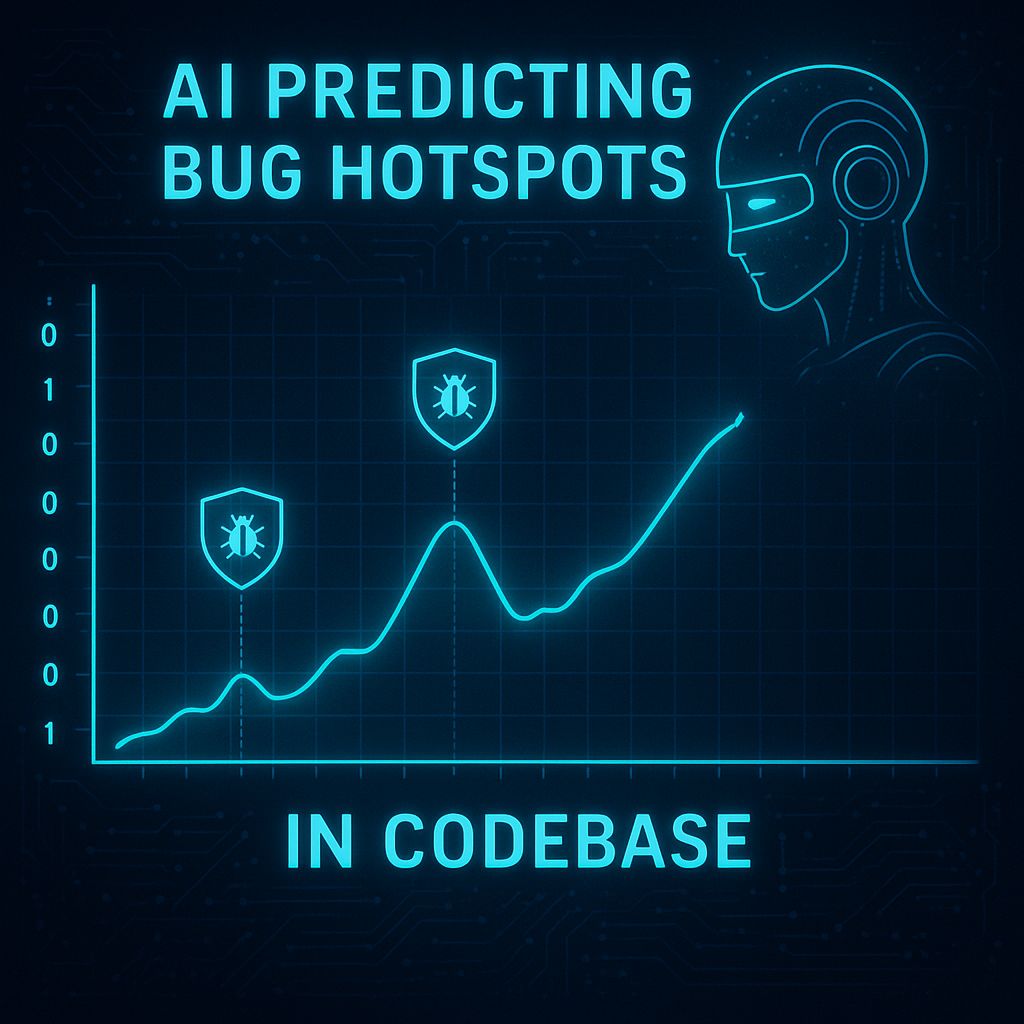
1. Introduction: The Shift From Manual to AI-Assisted Code Quality
Code reviews and bug fixing have, for decades, been predominantly human-intensive activities: lead developers going through pull requests line for line, QA teams reproducing flaws manually, and patch releases scheduled around the clock. In 2025, though, sheer quantity and complexity of software (particularly distributed microservices and mobile applications) render pure manual processes slow, costly, and error-ridden. Generative AI upends this paradigm by serving as a tireless co-reviewer who can scan millions of lines of code, find nuanced patterns of risk, and provide instant fixes. This isn't a productivity increase; it's a paradigm shift for how software quality is guaranteed — transitioning from reactive debugging to proactive, AI-driven prevention.
2. What Generative AI Actually Does in the Software Development Lifecycle
Everyone tends to imagine AI as just "auto-filling" code, but generative AI for review and bug fixing does much more than that. It consumes massive repositories, creates semantic maps of function and class interactions, and relies on sophisticated language models trained on billions of code samples to identify vulnerabilities, performance hotspots, or anti-patterns. Rather than having developers scan manually for "code smells," an AI agent highlights dangerous logic branches, obsolete libraries, or uncaught exceptions. It can even create unit tests or patch hints on the fly. This implies AI is not only an IDE-level assistant; it becomes a pervasive quality layer throughout the entire SDLC (software development life cycle), from planning to deployment.
3. From Pull Requests to Prompt Engineering: AI in Contemporary Code Reviews
Traditional code reviews consist of back-and-forth comments on GitHub or GitLab. With generative AI, engineers can send a pull request and get an automatically generated review report in natural language — style, security, performance, and maintainability — in an instant. And to top that off, engineers are learning "prompt engineering" for code: asking questions such as "Explain possible concurrency problems in this PR" or "Propose a more optimal algorithm for this loop" and waiting for the AI to respond. This discussion level makes code review an in-the-moment coaching experience, particularly useful for new coders who receive actionable feedback instead of nebulous suggestions.
4. Automated Bug Detection and Fix Suggestions: How It Works Under the Hood
Bug detection was always a time game. AI flips the script by examining code behavior trends and cross-referencing them against huge collections of known bugs. For instance, an AI system may recognize a null pointer dereference or memory leak pattern that has manifested in thousands of open-source projects previously. But identification is only the beginning: generative models can generate entire fix patches, complete with regression tests, for developers to accept, reject, or modify. In security-conscious environments, this can be used to catch zero-day flaws before they make it into production. Fundamentally, AI allows a "shift-left" strategy whereby bugs are blocked or fixed at commit time instead of post-deployment.
5. Speed vs. Accuracy: Why AI-Driven Reviews Cut Time but Require Human Review
One of the greatest strengths of AI code reviews is speed: hours or days of human scrutiny can be compressed into minutes. Continuous integration pipelines can execute AI tests on each commit, providing developers with instant feedback. But this speed has consequences. Generative AI can misread context, suggest changes that violate business logic, or ignore domain-specific constraints. That's why top teams embrace a "human in the loop" strategy, with AI addressing 80% of mundane problems and human reviewers concentrating on the tricky 20% — architectural choices, legal requirements, or subtle UX effects. This hybrid model benefits from both machine precision and human judgment.
6. Reduction of Technical Debt By Continuous, AI-Driven Code Analysis
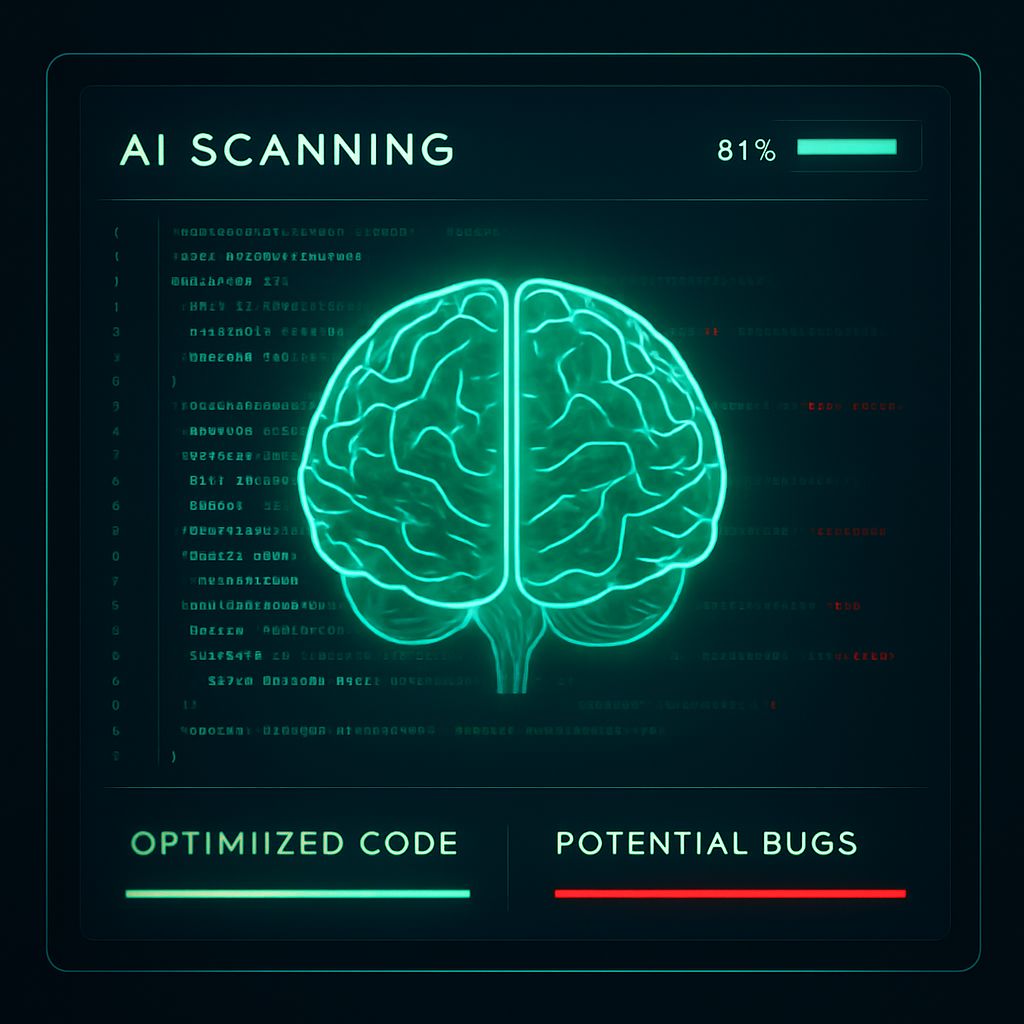
Technical debt is one of the major drags on business agility through the perpetually growing layers of suboptimal code, outdated dependencies, and hidden bugs. Generative AI acts like a continuous debt collector: it flags deprecated APIs, suggests refactoring, and keeps track of code health over time. Rather than large-scale rewrites, teams can incrementally chip away at technical debt through AI-driven recommendations. Across months, this results in cleaner, more manageable codebases, less production disruption, and accelerated time-to-market for new functionality. Essentially, AI makes code quality a living, breathing process integrated in the pipeline rather than a one-time function.
7. How AI Is Revolutionizing Security Audits and Vulnerability Management
Security audits traditionally occur late in the release lifecycle or not until after a significant event. This reactive strategy leaves huge holes. Generative AI reverses the timeline: through scanning code in real-time, it can trace dependency trees, identify old or compromised libraries, and mark risky coding practices the instant they are introduced. Imagine having a 24/7 security analyst built into every pull request. Even better, AI can match newly published CVEs (Common Vulnerabilities and Exposures) to your codebase in real-time and recommend mitigation measures. Over time, this moves organizations away from "patching" to "preventing," radically reducing breach risks, compliance penalties, and PR catastrophes that can annihilate brand trust.
8. Enriching Developer Learning and Onboarding with AI Feedback
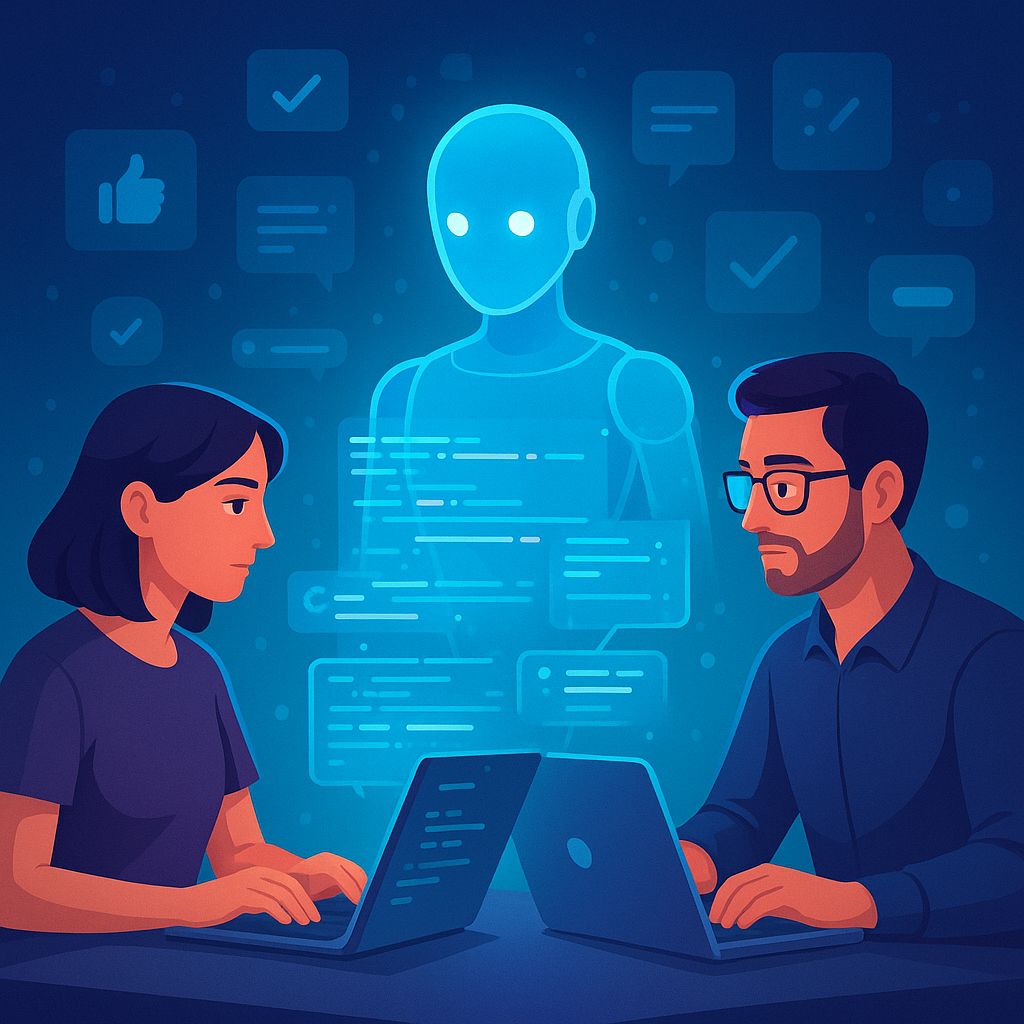
One of the least-discussed advantages of AI in code reviews is its pedagogical effect. When a junior coder checks in code, the AI does not simply declare "this is wrong"; it indicates why it's wrong, references documentation, and in some cases, even provides optimized alternatives. This turns every review into a micro-lesson, speeding up learning. New hires who once took months to understand a legacy codebase can now query the AI (“Explain the purpose of this module” or “Summarize the dependencies in this service”) and get instant, plain-English answers. This reduces onboarding costs, frees up senior engineers from repetitive mentoring, and raises the baseline quality of the entire team.
9. Scaling Agile Teams Without Sacrificing Code Quality
As companies scale, they often spin up multiple agile squads working in parallel, which multiplies the risk of inconsistent standards and duplicated bugs. Generative AI acts as a quality governor across all these streams. It enforces coding standards automatically, flags conflicts, and ensures cross-team consistency without endless manual reviews. Teams in different time zones can rely on AI’s round-the-clock availability to keep pipelines moving. That equates to a company increasing from 10 developers to 100 or 1,000 without code quality breaking under the weight of scale — something that was next to impossible with purely manual review processes.
10. Merging AI with DevOps and CI/CD Pipelines for Real-Time Quality Gates
DevOps lives and dies on automation, but code review has traditionally been one such bottleneck. By integrating generative AI into CI/CD, each commit can automatically be scanned for style, security, and performance problems before it even merges. AI-driven reports can integrate directly into ticketing systems such as Jira or GitHub Issues and can assign work to the appropriate developer. This establishes "real-time quality gates" where poor code never gets into the main branch, sharply curtailing rollbacks and hotfixes. These automated checks over time also generate a valuable dataset of common problems, which the AI can learn from in order to make it more accurate — a cycle of improved code and more intelligent AI.
11. The Business Impact: Faster Releases, Lower Costs, and Happier Teams
The true concern for executives isn't "Is the AI cool? " but rather "What's the ROI? " Code review generative AI provides quantifiable business benefits: shorter cycle time, reduced post-release defects, lower QA staff, less security risk, and higher developer satisfaction. More rapid, cleaner releases equate to faster time-to-market on new features, which has a direct impact on revenue.
And developers waste less time on mundane bug hunts and more time on innovative, high-leverage work — a massive retention win for an industry that is burnout-prone.".
That is, AI-powered reviews are not merely a technical advance; they're a strategic win that changes the economics of software delivery.
12. Looking Ahead: The Future of Human–AI Collaboration in Code Quality Some people worry that AI will displace developers or reviewers entirely, but the true strength comes from working together. In the near future, we’ll see “pair programming” evolve into “pairing with AI,” where the AI flags issues and proposes refactors in real time while humans apply context and make strategic decisions. Over time, AI will handle more of the rote work — like writing boilerplate tests or fixing routine bugs — freeing humans to focus on architecture, UX, and innovation. Organizations that adopt this symbiosis early will not only deliver superior software but will also attract the best talent who wish to employ leading-edge tools.undefinedThe future of code quality is not machine against human; it's machine and human, cooperating to produce levels of speed, security, and imagination never before possible.

 Indian Online Marketing Team
Aug 10, 2025
 Indian Online Marketing Team
Aug 24, 2023
 Indian Online Marketing Team
Aug 24, 2023
 Indian Online Marketing Team
Aug 24, 2023
 Indian Online Marketing Team
Aug 24, 2023