
How to Write Headlines That Drive 3x More Clicks
How to Write Headlines That Drive 3x More Clicks
⸻
1. Why Headlines Make or Break Your Content's Success
Your headline is the billboard of your content. Regardless of the value of your article, video, or ad copy, most will determine whether to engage or scroll past within three seconds of reading the headline. Copyblogger research indicates that 8 out of 10 people read the headline but only 2 out of 10 read the rest — that's just how powerful (or weak) headlines are.
Frame your headline as a guarantee to the reader. Your headline promises the reader the benefit, topicality, and tone of what's to follow. A dull, unclear headline squanders all your hard work; a clear, engaging headline can increase your click-through rates and ROI threefold. In the attention economy today, your headline isn't an afterthought — it's your initial and most crucial sales pitch.
⸻
2. Knowing the Psychology of Click-Worthy Headlines
Clickbait headlines succeed because they're built on human psychology. Humans react to stimuli:
• Curiosity – We despise being unaware of something ("What you're missing about…").
• Urgency – We don't want to miss something ("Limited time", "Today only").
• Emotions – We react on emotions rather than reason ("heartbreaking", "stunning").
• Specificity – We believe in specific facts ("5 proven tips" vs "some tips").
Your task as a marketer or writer is to braid these triggers into the headline without fibbing or making impossible promises. This leaves a "curiosity gap" — sufficient curiosity to compel a person to click, but sufficient definition to provide the correct expectations. Well done, your headlines don't just get readers, they get the right readers.
⸻
3. The "4U" Formula for Irresistible Headlines (Useful, Urgent, Unique, Ultra-Specific)
The most dependable headline structure is the 4U Formula:
• Useful – The headline must deliver a tangible advantage. Example: "7 Simple Steps to Halve Your Grocery Bill."
• Urgent – It must feel timely or consequential. Example: "Why You Need to Lock Down Your Instagram Account Today."
• Unique – Stand out from the generic titles your rivals use. Example: "The Unconventional Habit That Turned Me into a Millionaire in 12 Months."
• Ultra-Specific – Provide numbers, names, data, or outcomes. Example: “How I Got 25,000 Email Subscribers in 30 Days Using This Strategy.”
Merging these four characteristics can make a generic headline pop out in a stream of infinite content. You can even experiment and see which "U" works best with your crowd.
⸻

4. Power Words That Instantly Boost CTR
Some words elicit stronger responses than others. These are referred to as power words, and they trigger emotions or action. Employing them thoughtfully can significantly enhance your CTR.
Examples:
• Curiosity & Intrigue: "Secrets," "Revealed," "Hidden," "Surprising," "Little-Known."
• Urgency & Scarcity: "Today," "Now," "Only," "Deadline," "Final Chance."
• Authority & Proof: "Proven," "Research-Backed," "Case Study," "Experts."
• Emotion & Excitement: "Stunning," "Amazing," "Heartbreaking," “Brilliant.”
Rather than using the words "Tips to Write Better Headlines," use "10 Proven Headline Tricks Copywriters Swear By.
The second one is not only more plausible but also leverages curiosity and authority — a double whammy for clicks.
⸻
5. Numbers, Data, and Specificity: Why They Entice Readers
Numbers silence noise. A number-heavy headline conveys precision and organization. "How to Enhance Your Instagram Engagement," for instance, sounds fuzzy, but "7 Data-Driven Strategies to Triple Your Instagram Engagement in 30 Days" sounds actionable and trustworthy.
Why numbers work
• They guarantee a particular structure (readers know what they're getting).
• They suggest the content is tested or researched, rather than opinion.
• They suggest instant benefits ("5 minutes," "3 steps," "10 hacks").
Employ odd numbers wherever possible ("7" works better than "6" or "8"), and combine numbers with powerful adjectives ("7 Surprisingly Easy Ways…"). This quantifiable promise + emotional curiosity combination makes your headlines unresistable.
⸻
6. Employing Curiosity and the "Open Loop" Methodology Without Being Clickbait
Curiosity compels clicks, yet clickbait destroys trust. The skill lies in building an open loop — raising a question or suggesting an insight the reader can only answer by clicking — without misrepresenting what they will receive.
For instance:
• Clickbait: "You Won't Believe What This Celebrity Did!"
• Ethical Open Loop: “The Surprising Strategy This Celebrity Used to Triple Their Business Revenue.”
Here, in the second example, you generate curiosity but also give the context (it is about business revenue). This avoids disappointment, minimizes bounce rates, and establishes long-term credibility.
The open loop is particularly effective in educational, business, or marketing copy: "The One Headline Change That Increased My CTR by 300%" or “Most Businesses Fail at This Simple Facebook Ads Trick.”
The takeaway: Curiosity and clarity = high CTR and high trust.
7. A/B Testing Headlines to Find What Works
Even the most experienced copywriters can’t predict with 100% certainty which headline will perform best. A/B testing removes the guesswork. It means showing two (or more) versions of your headline to different segments of your audience and measuring which gets the higher click-through rate, engagement, or conversion.
For example, your email newsletter might use two subject lines:
• A: “10 Proven Ways to Grow Your Email List”
• B: “Grow Your Email List 3x Faster With These 10 Proven Tips”
The distinction may appear slight, but you could experience a 30–50% flip in open rates. Testing is done on headlines for landing pages, Facebook ads, YouTube thumbnails, and LinkedIn posts to determine what speaks to your individual audience.
Best practice:
• Return to testing one variation at a time (power word, number, format).
• n ordinarily give each variant an adequate number of impressions to achieve statistical significance.
• Monitor not just clicks, but also bounce rate and time on page (you want quality traffic, not hollow clicks).
Headline testing builds a culture of a feedback loop that continuously optimizes your CTR and ROI.
⸻
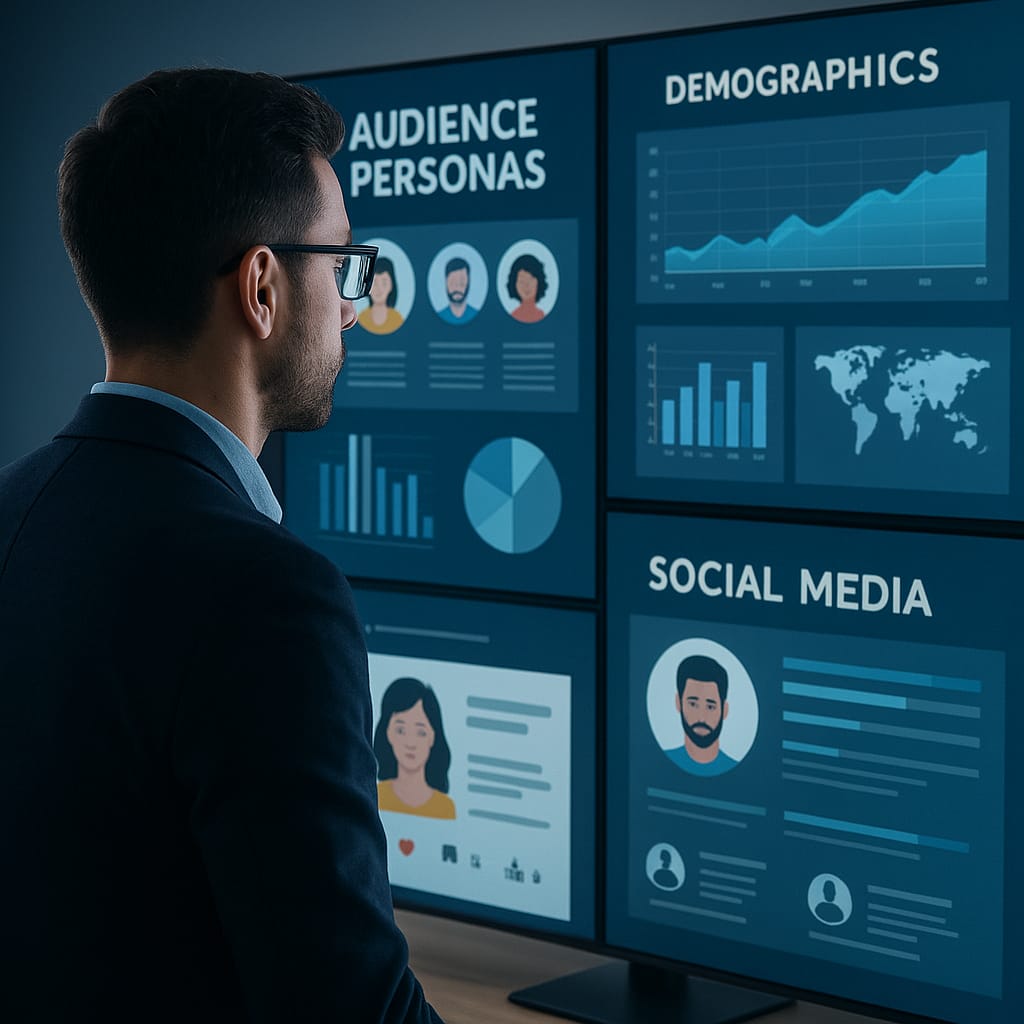
8. Opting for Different Headlines across Different Platforms (Blogs, Email, Social Media)
Your perfectly optimized headline for your blog may not perform as well on Instagram or email. Each platform has a different user mindset, character constraints, and algorithm inclinations.
Examples:
• Blog posts: Descriptive, SEO-friendly ("How to Write Headlines That Drive 3x More Clicks").
• Email subject lines: Short, personal, curiosity-driven ("My 3x CTR Headline Trick").
• LinkedIn posts: Value-oriented, professional tone ("The Headline Strategy That Tripled My CTR").
• Instagram Reels/TikTok captions: Punchy, emotional ("Stop Writing Boring Headlines!").
Adapting your headline means re-packaging the same core promise in a way that fits the platform’s language and attention span. This multiplies your reach because you’re not simply copy-pasting — you’re meeting people where they are.
⸻
9. Common Headline Mistakes That Kill Clicks
Knowing what not to do is as important as knowing what works. The most frequent mistakes include:
• Being too vague: “Tips for Better Marketing” says nothing specific.
• Being misleading: Overpromising results in disappointment and high bounces.
• Being too long: Cut-off headlines in search results or social feeds fail to make an impact.
• Using jargon: Your readers demand simplicity, not jargon.
• Ignoring mobile: Lengthy headlines can be cut off on small screens.
All these errors cost you credibility, reach, and engagement. A headline is akin to a first date — mess it up, and you hardly ever get a second date.
⸻
10. 10 Actual Examples of Successful Headlines You Can Learn from
Learning from actual winners speeds up your development. Below are a couple of types:
• List + Benefit: "7 Surprisingly Easy Ways to Save Money on Groceries"
• How-To + Result: "How I Doubled My Freelance Income in 30 Days"
• Question + Curiosity: "Are You Making These 3 Costly Facebook Ads Mistakes?"
• Data + Expertise: "New Research Shows This Subject Line Increases Opens by 47%"
• Negative Hook: “Stop Writing Headlines That Nobody Reads”
Break down why they work: specificity, power words, curiosity, credibility. Maintain your own swipe file — a directory of excellent headlines you can draw reference from when you get caught.
⸻
11. Tools & Resources to Help You Write Better Headlines
Even experts use tools. Some of the best are:
• CoSchedule Headline Analyzer – Grades your headline's readability, emotion, and framework.
• Sharethrough Headline Analyzer – Provides an "engagement" and "impression" score.
• AnswerThePublic – Displays actual questions people are asking on your subject for keyword inspiration.
• BuzzSumo – Indicates which headlines get most shares on social for any topic.
• AI tools like ChatGPT – Create dozens of headline options in seconds to A/B test.
These tools don't replace your creativity — they augment it by providing data-driven feedback.
⸻
12. Bringing It All Together: Your Headline Checklist for 3x More Clicks
To summarize, here's an easy checklist before you press publish:
• Does your headline offer an obvious benefit?
• Does it evoke emotion or curiosity without being deceitful?
• Is it specific and, if possible, numbered?
• Does it include at least one power word?
• Is it the correct length for the platform (50–70 characters for SEO, shorter for social)?
• Have you A/B tested a version?
Great headlines aren’t an accident. They’re the product of psychology, structure, testing, and empathy for your reader. Master these elements, and you’ll consistently write headlines that triple your clicks, build trust, and amplify your content’s reach.

 Indian Online Marketing Team
Aug 10, 2025
 Indian Online Marketing Team
Aug 24, 2023
 Indian Online Marketing Team
Aug 24, 2023
 Indian Online Marketing Team
Aug 24, 2023
 Indian Online Marketing Team
Aug 24, 2023