
The Psychology of Branding: Why Colors, Fonts, and Stories Sell
The Psychology of Branding: Why Colors, Fonts, and Stories Sell
⸻
1. Introduction: Branding Beyond Logos and Taglines
When most people hear the word "branding," they instantly think about logos, memorable taglines, or stylish packaging. But branding is actually not what a company says about itself — it is what people feel when they are exposed to it. And those feelings have a lot to do with psychology.
Each time a consumer views a logo, hears a slogan, or touches a product, their brain automatically makes connections. These connections are not random; they're created through emotions, memories, cultural norms, and unconscious cues. When you think of McDonald's, for instance, the golden arches likely make you think of fries, childhood memories, or speedy comfort food. That's branding — a shortcut in your brain that associates symbols with feelings.
This is why contemporary branding is less concerned with "what the product is" and more concerned with "what the product means" to shoppers. It's not so much about logos and taglines, but about the psychological experience that inspires trust, loyalty, and influence.
⸻
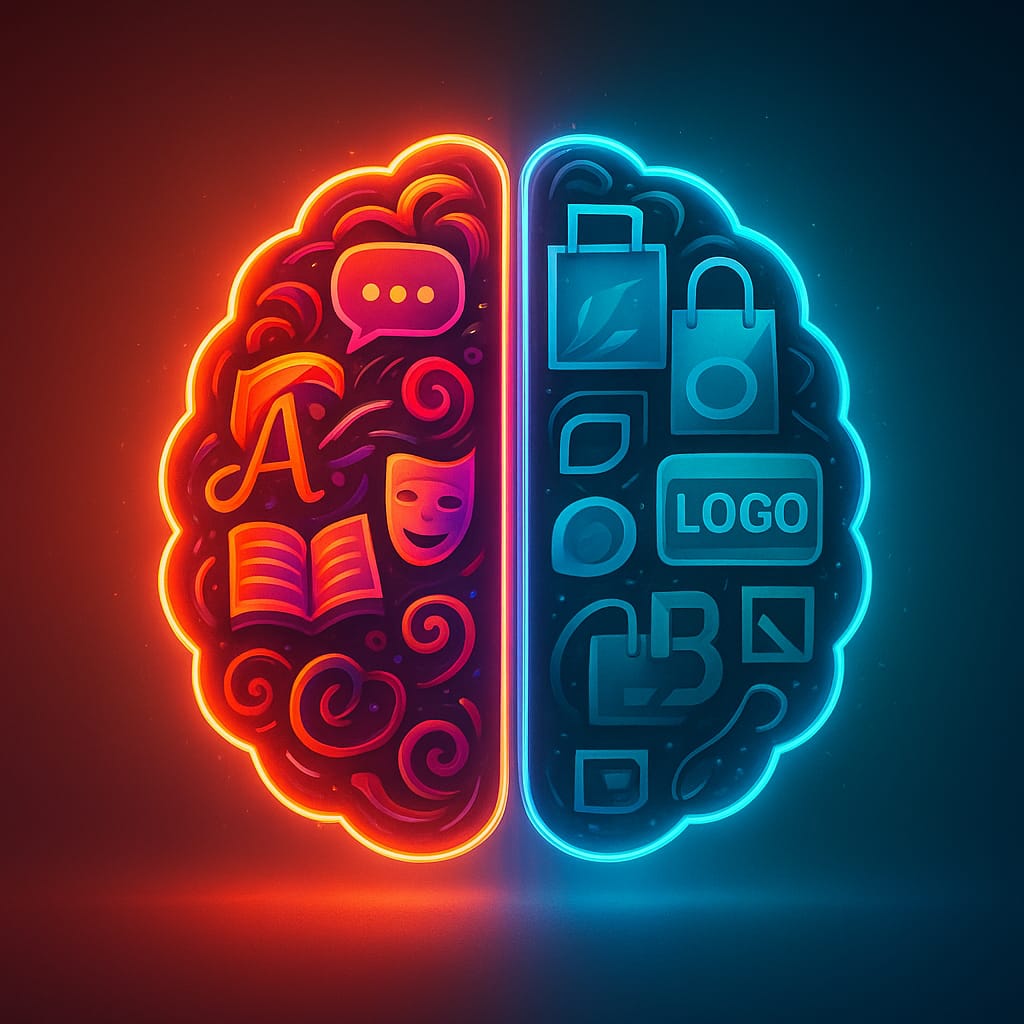
2. The Science of Colors in Branding
Color is perhaps the strongest branding psychology tool because it has a direct effect on our subconscious. Research indicates that as many as 90% of immediate judgments made about a brand can be made solely based on color. Which means that before your name and tagline are even read, people are already making an impression — solely based on color.
Let's dissect with some popular brand colors:
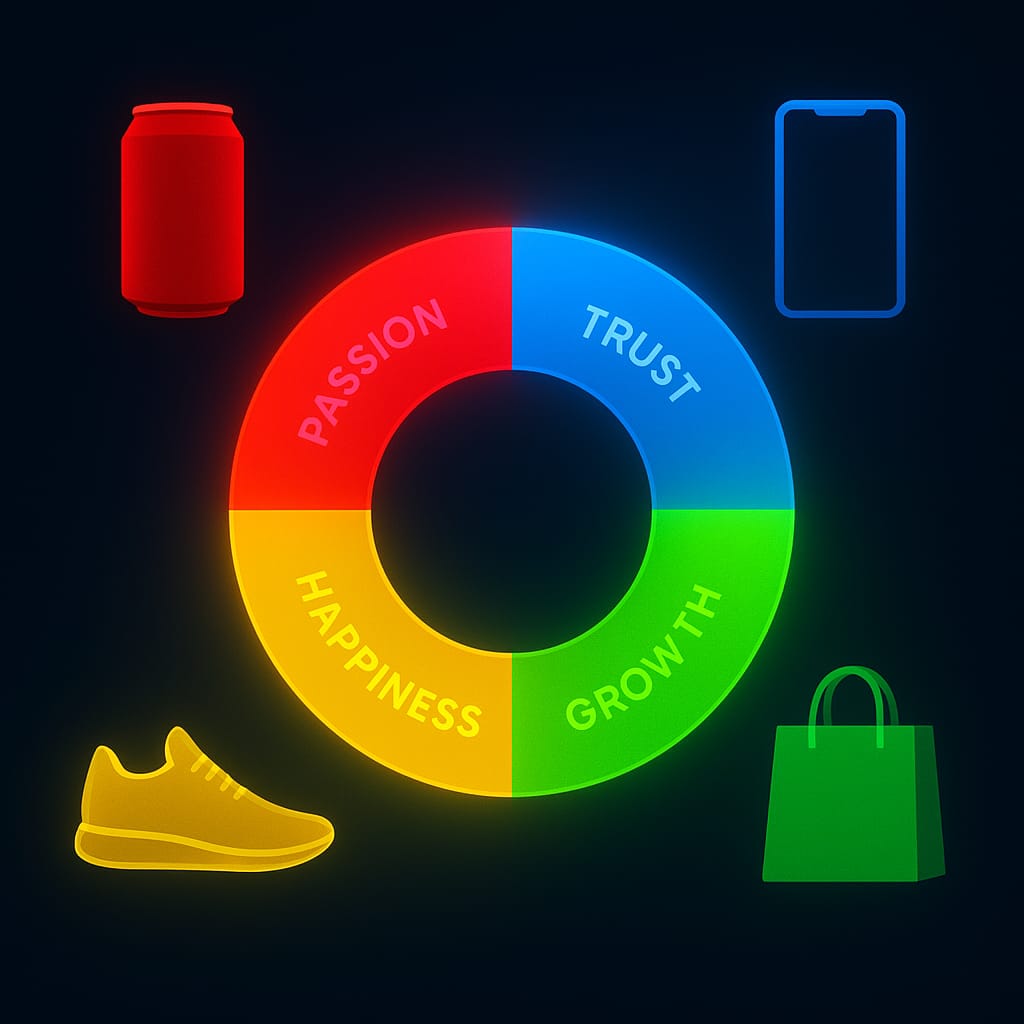
• Red → Passion, excitement, and urgency. That's why Coca-Cola, YouTube, and Netflix all employ red — they wish to arouse energy and awareness. In selling, red is frequently utilized for "Limited Offer" or "Buy Now" buttons because it induces a sense of urgency.
• Blue → Trust, serenity, and professionalism. Technology firms such as Facebook, LinkedIn, and PayPal employ blue to communicate reliability. Banks similarly rely significantly on blue as they would want customers to believe their money is in safe hands.
• Green → Growth, wellness, and sustainability. Companies such as Starbucks and Whole Foods employ green to consolidate their eco-friendly or fresh value proposition.
• Black & Gold → Sophistication, luxury, and elegance. Luxury brands such as Rolex, Chanel, and Lamborghini employ such pairings to convey exclusivity.
But here comes the twist: cultural psychology is a massive influence. For instance, while white conveys purity and peace in Western societies, in some Asian nations, it's synonymous with mourning. Such brands that ignore cultural color psychology tend to go out of business in foreign markets.
The mental trick is easy: consumers don't purchase products, they purchase the feelings colors evoke.
3. Typography and Fonts: The Silent Persuaders
While colors shout, fonts whisper. Typography goes unnoticed, but it is among the most subtle yet effective psychological weapons in branding. A font can make your brand serious, playful, elegant, or futuristic without ever speaking a word.
Here's why:
• Serif Fonts (such as Times New Roman, Garamond) → They have small "feet" at the bottom of letters and convey tradition, trust, and authority. Hence, law firms, newspapers, and universities utilize serif fonts.
• Sans Serif Fonts (such as Helvetica, Arial) → Simple, modern, and basic. Technology companies such as Google and Spotify depend on sans serif fonts to convey simplicity and innovation.
• Script Fonts (such as Brush Script) → Personal, stylish, and creative. Frequently employed by boutique and fashion brands to communicate individuality and artistic appeal.
Consider high-end brands such as Dior or Prada — their font is sharp, bold, and sophisticated. It speaks of exclusivity even before you view the product. A fun startup that sells ice creams, however, may employ rounded, fizzy fonts to convey happiness and welcomingness.
Typography psychology is so powerful that a simple change of font style in an ad can shift consumers' perceptions of trustworthiness. For instance, if a hospital employed a relaxed comic-style font, credibility would be immediately lost.
In brief: fonts aren't design decisions — they're personality cues.
⸻

4. Storytelling: Bringing Brands to Life as Human Experiences
Humans are hardwired to listen for stories, not for data. According to neuroscience studies, when we listen to stories, our brains release oxytocin — the "cuddle hormone" that generates empathy and connection. It's for this reason that storytelling is a very effective psychological branding mechanism.
Consider Nike. Nike doesn't sell shoes — it sells overcoming adversity, pushing boundaries, and believing in oneself. Its "Just Do It" brand is less about the product and more about the human narrative of aspiration and bravery. Apple's "Think Different" campaign was not about processors or memory — it was about standing with the innovators, dreamers, and rebels.
Why does it work? Because stories make brands human. They make companies into characters in people's lives. Rather than "We sell coffee," Starbucks communicates, "We are your third place — not home, not work, but a place where you belong." That story creates loyalty far greater than the flavor of coffee.
Psychologically, it generates mirror neurons in the brain that make individuals feel like they are on the journey with it. It gets them emotionally invested — and when individuals become emotionally invested, they're much more likely to buy, suggest, and be loyal.
⸻
5. The Role of Consistency in Brand Psychology
Consistency is the glue that sticks branding in the mind of the consumer. In psychology, there is something known as the mere exposure effect — the more we are exposed to something, the more we like and trust it.
This is why successful brands repeat the same colors, fonts, tone, and stories across every touchpoint. Imagine if McDonald’s used red and yellow in one country, then blue and green in another. Or if Apple suddenly shifted from its minimal design to loud, flashy graphics. The inconsistency would break consumer trust.
Consistency creates familiarity, and familiarity creates comfort. Customers are likely to buy from a brand they "know," even though they may not know why. It's for this reason that companies invest millions to ensure that everything — from the packaging to social media hashtags — is on-brand.
But consistency is not only visual. Consistency is also emotional consistency. For instance, Zomato only employs humor in its voice of the brand. Whether it is an ad, an app alert, or a social media update, the tone is always playful and down-to-earth. Such psychological consistency leads users to eagerly anticipate Zomato's communication.
Finally, consistency builds mental shortcuts. Consumers don't need to think; they immediately know who you are and what you believe. And in a noisy market, that mental shortcut is between getting noticed and getting ignored.
6. Emotional Triggers in Branding: How Feelings Drive Decisions
At the core of branding psychology is one irreducible fact: customers don't buy rationally, customers buy emotionally. Logic rationalizes the purchase afterwards, but emotion leads the initial impulse.
Psychologists refer to this as the dual-process theory:
• System 1 (fast, emotional thinking) → Fast, gut-level reactions.
• System 2 (slow, rational thinking) → Deliberate, logical thinking.
Effective branding engages System 1 initially — the emotional brain. When a customer views an ad that inspires them to laugh, cry, or get pumped up, their brain releases oxytocin or dopamine. This chemical response triggers a positive connection to the brand before they even contemplate features or price.
Use these examples:
• Cadbury's Dairy Milk does not sell chocolate — it sells happiness and nostalgia. Its ads convey family moments, festivals, and "kuch meetha ho jaye" (let's make it sweet).
• Nike does not sell shoes — it sells victory, grit, and the victory of the human spirit.
• Apple does not sell phones — it sells creativity, individuality, and the sense of belonging to a tribe of innovators.
These brands trigger deep human emotions: love, happiness, belongingness, pride, fear of missing out, or even status envy. As soon as these emotional hooks are established, the brand resides in the subconscious mind of the consumer — and it is almost impossible for any competitor to sever that connection.
Most important takeaway: The greatest brands don't sell commodities, they sell emotion.
⸻

7. The Power of First Impressions: Why Consumers Make Judgments in Seconds
Have you ever visited a website and immediately exited because it looked dated or unreliable? That's branding psychology at work. Studies indicate that it only takes 0.05 seconds for customers to make a first impression about a brand based on visual identity.
That's why businesses invest so heavily in packaging, logo design, and website looks. That very first touchpoint creates curiosity or kills trust.
Let's dissect this:
• Luxury brands such as Louis Vuitton or Rolex employ advanced visuals, high-end packaging, and classy stores to communicate exclusivity from the outset.
• Tech brands such as Apple emphasize minimalist, neat designs to imply ease and innovation.
• Food delivery apps such as Zomato or Swiggy ensure their apps are quick to load, with bright visuals, to convey speed and reliability.
First impressions also cause priming, a psychological effect in which the first experience colors all subsequent interactions. So, for instance, if the first time you shop Amazon the checkout goes smoothly, you'll unconsciously think Amazon is always reliable. Even if subsequently there's a delivery problem, your mind is primed to assume the best for the brand.
Bottom line: In branding, you never have a second chance at a first impression.
⸻
8. Case Studies: Top Brands Leveraging Psychology
In order to truly see the power of branding psychology in action, let's consider some real-life examples:
• Coca-Cola → The brand is a masterclass in emotional branding. It doesn’t just sell soda; it sells “happiness in a bottle.” From the red logo (excitement, energy) to campaigns like “Open Happiness,” Coca-Cola associates itself with joy, family, and celebrations. That’s why during holidays, Coca-Cola ads dominate — they’ve positioned themselves as the drink of togetherness.
• Apple → Apple's success is due to its minimalist design approach (fonts and color), storytelling ("Think Different"), and tribal branding. Having an iPhone is no longer simply about utility; it's about identity, lifestyle, and belonging to a "club" of innovators. Apple made its consumers brand evangelists.
• Zomato → A contemporary Indian instance. Zomato's snappy, meme-based advertising leverages humor psychology. Individuals do not merely use Zomato to order food; they follow Zomato's brand voice for entertainment purposes. That psychological connection generates recall, even if you are not hungry currently.
• Airbnb → Airbnb doesn't sell "rooms." It sells the narrative of "belonging anywhere." It makes travelers emotionally attach to the vision of being a part of the culture, not a place to stay. It took them beyond being a mere lodging business.
These brands validate one fact: psychology is not only a branding tool — it is branding itself.
⸻
9. Common Mistakes in Brand Psychology
Not all brands do psychology correctly. There are many that make errors that backfire and damage trust. Among the most common traps are:
• Color misalignment → Picking colors that don't align with the brand's values. A bank with bright neon colors, for instance, appears to be untrustworthy.
• Font confusion → Having inconsistent or inappropriate typography (e.g., Comic Sans for a law firm). It provides a disconnect between message and identity.
• Inconsistent narrative → Switching tone too frequently (serious on the site, lighthearted on social media) confounds the audience. Consistency builds psychological trust.
• Over-promising emotionally → Brands that attempt to employ emotional narratives but do not follow through (e.g., airlines depicting comfort in ads but delivering substandard service) engender a trust gap. Psychologically, disappointment wounds loyalty more than no promise.
• Ignores cultural context → Meanings of colors, symbols, and words vary across cultures. A global brand that disregards cultural psychology can alienate customers.
Lesson: Branding psychology is potent, but when misapplied, it can create mistrust rather than loyalty.
⸻
10. The Future of Branding Psychology
The future of branding is in a deeper, more individualized knowledge of human psychology. With AI, data science, and neuroscience, brands are now able to forecast consumer behavior with greater precision than ever before.
This is where the future is going:
• Neuromarketing → Brands employing brain scans and biometric tests to know how individuals emotionally react to advertisements before releasing them.
• Personalization through AI → Netflix already does this with curation based on your mood and taste. One day, websites and ads will change in real time according to your psychological triggers.
• Sensory branding → It's not just color and font anymore. Brands are investing in sound, touch, and even scent. Consider how Intel's jingle or Starbucks' coffee smell stimulates instant recall.
• Purpose-branding → Future shoppers, particularly Gen Z, don't purchase products; they purchase values. Brands that are associated with causes (environmental responsibility, equality, mental wellness) will gain deeper psychological allegiance.
In the end, the future is for those brands that are able to combine data with empathy. Technology will do the providing, but psychology will still be the groundwork. Because regardless of how sophisticated marketing becomes, human beings will always purchase on emotion first, reason second.

 Indian Online Marketing Team
Aug 10, 2025
 Indian Online Marketing Team
Aug 24, 2023
 Indian Online Marketing Team
Aug 24, 2023
 Indian Online Marketing Team
Aug 24, 2023
 Indian Online Marketing Team
Aug 24, 2023