We Spent ₹10,000 on Facebook Ads – Here's What Worked and What Failed
1. Introduction: Why We Decided to Test Facebook Ads with ₹10,000
Facebook Ads has been the darling of digital marketing for more than a decade, but if you’ve been paying attention in 2025, you’ll notice the conversations are shifting. Some marketers swear it’s “dead” because of high costs, privacy changes, and shrinking organic reach. Others are quietly making millions, but they’re not shouting about it.
We wanted to see for ourselves. No hypothesis. No "expert" speculation. Just a straightforward, intense experiment.
We chose ₹10,000 as our experimental budget for three reasons:
- It's small enough for any small business owner to identify with — We didn't want to be one of those blogs displaying million-rupee ad spends.
- It's large enough to actually test several variables — With ₹1,000–₹2,000, you can't test much before you reach the budget limit.
- It creates discipline — When every rupee matters, you make better decisions.
The product we selected was one that had:
- Clear demand in the market (we verified this using search data + competitor ads).
- A mid-ticket price point (₹1,000–₹3,000), such that we could have multiple sales from a small budget.
- A simple buying funnel (no 10-step lead nurturing; just click → view → buy).
Our mission was straightforward: Could a small brand make ₹10,000 worth of profitable sales on Facebook Ads in 2025 without "big brand" budgets?
2. The Campaign Setup: How We Devised Our Facebook Ad Strategy
You would think Facebook Ads is all about "click the boost button" and pray. That's like sowing seeds in the wind and waiting for a farm.
We planned for two full days before we spent even ₹1.
Step 1 – Specify the Specific Goal
We made Purchase our priority event, not clicks, not engagement. This would mean Facebook's algorithm would actually look for individuals who are more likely to buy, not individuals who enjoy clicking on stuff.
Step 2 – Budget Distribution
Our ₹10,000 budget was broken down into:
- ₹6,000 for Testing (Phase 1): Spread over 3–4 days to test various creatives, audiences, and formats.
- ₹4,000 for Scaling (Phase 2): Invest solely in the winners from Phase 1 to optimize returns.
Step 3 – Campaign Structure
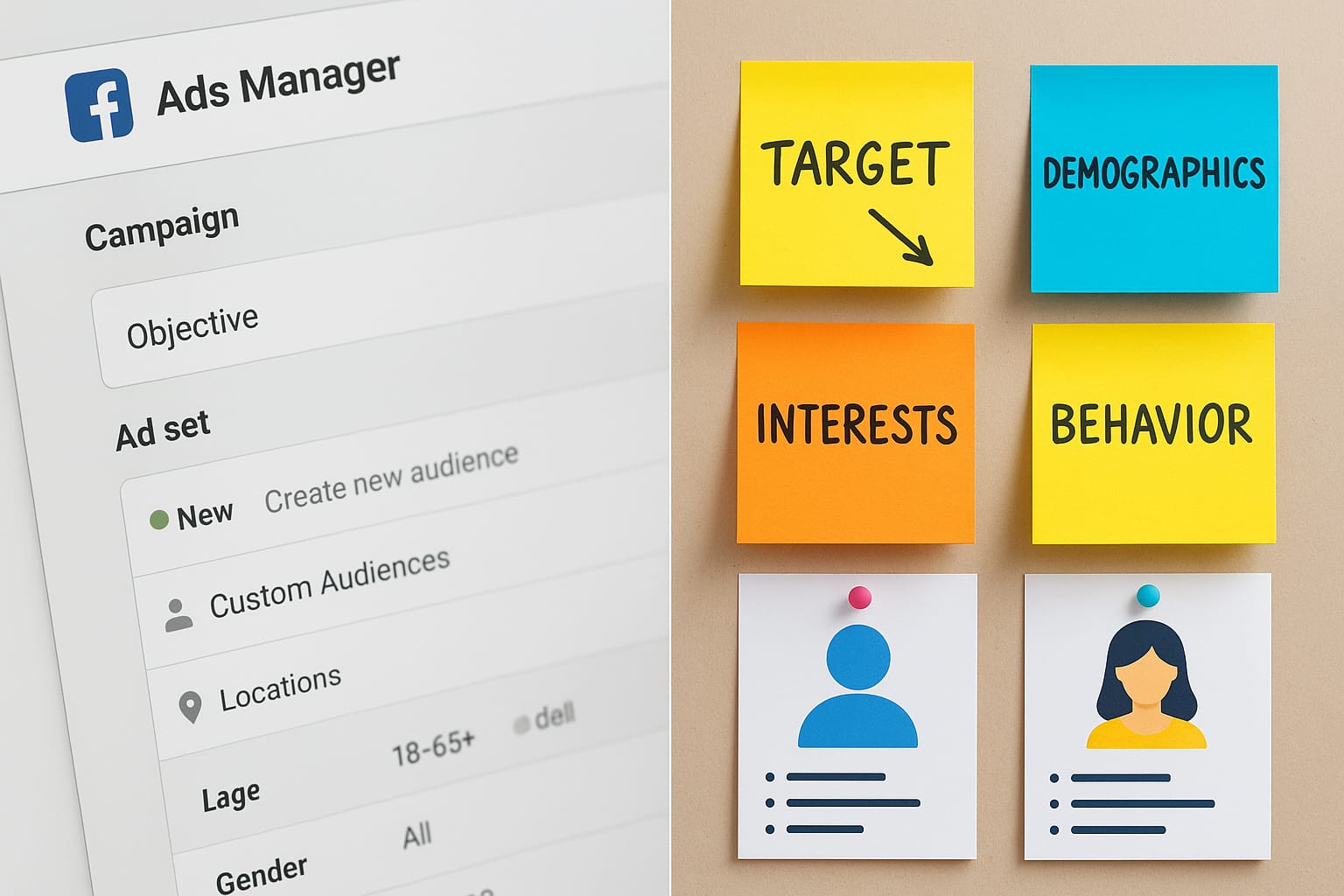
We had three core ad sets during Phase 1:
- Broad Interests: Leveraged appropriate hobbies, brands, and behaviors associated with our niche.
- Lookalike Audiences: Constructed from our previous buyers and website visitors.
- Retargeting: Warm leads who visited our site but not bought in the past 30 days.
This design allowed us to view where actual gold was — cold traffic, lookalikes, or warm retargeting.
We also ensured all ads were mobile-first, as 90%+ of Facebook traffic in India comes from smartphones.
3. The Creatives: What Our Ads Looked Like and Why We Designed Them This Way
In Facebook Ads, creative reigns supreme. The targeting, the budget, the placements — they're all important, but if your creative doesn't halt the scroll, the game is already over.
We approached this as a battle between attention and distraction.
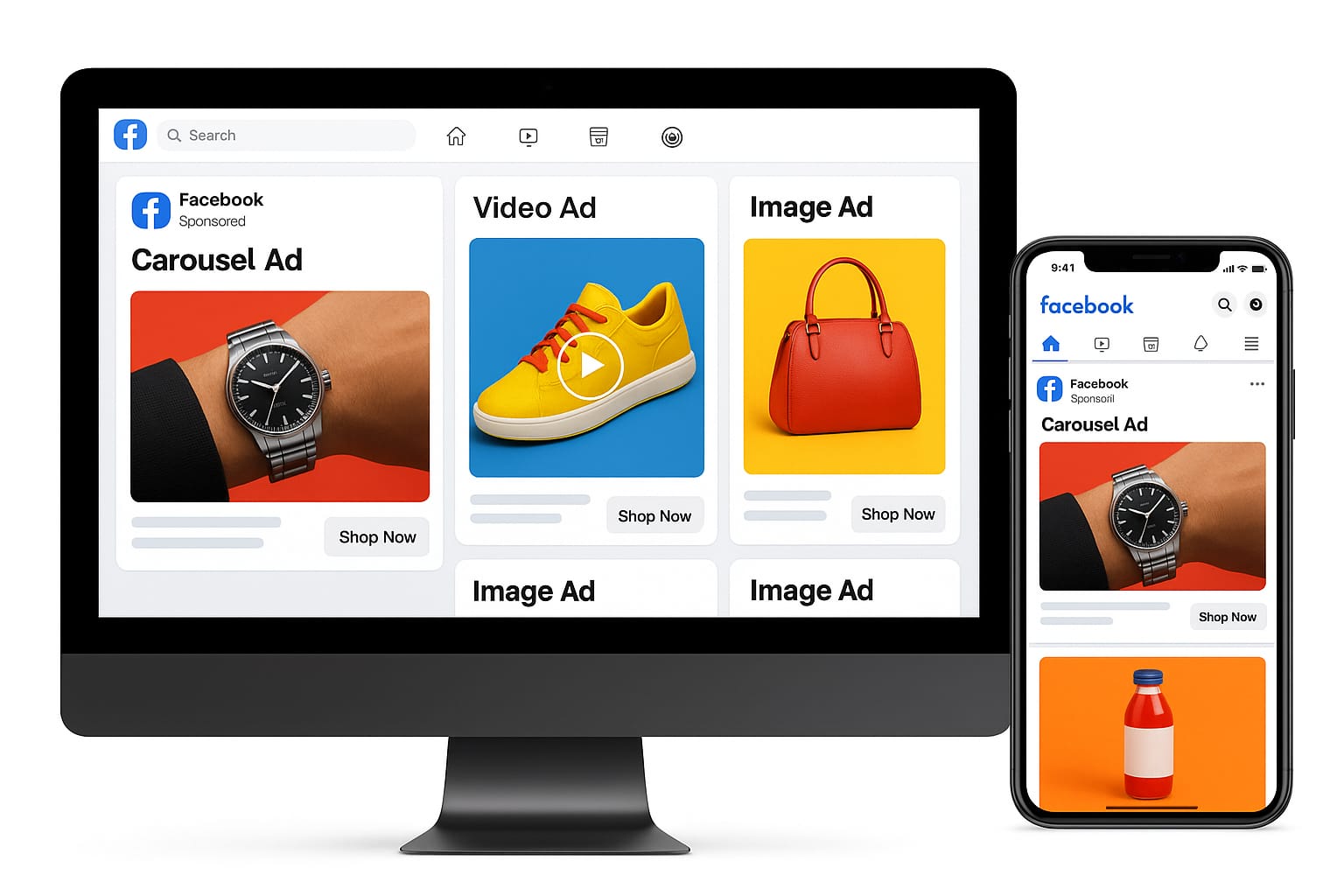
Image Ads
We experimented with three different image ideas:
- Problem-Solution Visual: Featured the pain point obviously in the first half of the ad and the happy, solved state in the second half.
- Lifestyle Product Shot: The product being used, in an actual setting, with a human connection.
- Bold Text on Background: Simple, just a grabbing promise in big, contrasting letters.
Video Ads
- Duration: 15–20 seconds max (long enough to conclude, short enough to convince).
- Hook: The initial 3 seconds shocked, asked questions of, or intrigued the viewer.
- Structure: Hook → Problem → Solution → CTA.
- Captions: 85% of Facebook videos are watched while muted, so captions were not optional.
Copywriting
We skirted dry, technical product copy. We employed instead:
- Pain-driven headlines: "Fed up with spending hours on this?"
- Urgency triggers: "Last 24 hours."
- Social proof: "Used by 5,000+ Indian customers."
The objective was emotion first, logic second — since humans buy emotionally and justify later.
4. The Targeting: Who We Tried to Reach and How We Chose Them
Facebook's targeting in 2025 is not what it was in 2018. Privacy updates, iOS limits, and less data sharing prevent advertisers from being laser-specific with interests anymore. That's why we had to depend on a combination of algorithmic and manually curated targeting.
Cold Traffic (Interest Targeting)
We experimented with several interest clusters such as:
- Related products/services.
- Communities, influencers, and publications in the niche.
- Behavioral characteristics such as "online shoppers" and "early adopters."
Lookalikes (Algorithm-driven)
We developed:
- 1% Lookalike of Previous Purchasers — The most similar match to our target audience.
- 1–3% Lookalike of Site Visitors — Smaller but still still relevant.
Retargeting (Warm Audiences)
- Individuals who interacted with our ads within the last 14 days.
- Shoppers who added items to basket but did not buy.
- Fans who interacted with our Instagram content within the last 30 days.
We used warm audience ads that differed from cold ads — rather than awareness, we used closing the sale with more compelling offers, testimonials, and a sense of urgency.
5. The Metrics: How We Measured Success
If you can't measure it, you can't improve it. Most businesses dump money into Facebook Ads without even knowing what success is.
We established clear KPIs:
- CTR (Click-Through Rate): To gauge how well our creatives paid attention. Target: >2% for cold ads.
- CPC (Cost Per Click): To check that we were not paying too much for traffic. Target: ₹5–₹12 based on audience type.
- Conversion Rate: To monitor how well our landing page was converting traffic into buyers. Target: 3–5% for cold traffic, 5–10% for retargeting.
- ROAS (Return on Ad Spend): The ultimate number. Our breakeven ROAS was 2x — anything above that was profit.
- Frequency: To avoid showing the same ad too many times, which leads to ad fatigue and higher costs.
We monitored the ads daily at 10 AM and 8 PM, killing anything that spent more than ₹300 without results. This rapid optimization kept our budget focused on winners.
6. What Worked: The Campaign Elements That Delivered Results
After seven days of rolling out our ads, one thing became clear — 80% of our results came from 20% of our efforts (hello, Pareto Principle). Here's what was the big winners:
Video Ads Outperformed Image Ads
- Our top-performing video ad had a CTR of 3.8% compared to 1.9% for the top image ad.
- Users interacted for longer, remained on-site for the full 15 seconds, and clicked through because they felt like they comprehended the benefits of the product prior to exiting Facebook.
- Captioning increased view-through by 17% — an enormous increase given most viewing is done with sound off.
Short, Pain-Point-Focused Copy
- Our headline "Stop Wasting ₹5,000 a Month on This Mistake" was more click-worthy than a lengthy product headline.
- Individuals reacted more strongly to emotionally charged terms such as "tired," "wasting," and "instantly" than to technical language.
Retargeting was the Profit Engine
- Cold ads drove the traffic, but retargeting closed the deals.
- Our retargeting ad with a minimal testimonial and limited-time discount achieved a ROAS of 5.3x, versus 1.8x for cold ads.
- Frequency was capped below 3, so the ads remained fresh and not annoying.
7. What Went Wrong: Where We Lost Money and Why
Not all ads paid off — and that's where the lessons were truly learned.
Broad Audience Testing Was a Budget Leak
- Our "broad audience" ad group (no targeting except by location and age) spent ₹1,200 in 48 hours with not one sale.
- The CTR was a paltry 0.8%, indicating the algorithm couldn't find the correct buyers in time if it didn't have specific direction.
Generic Stock Photos Got Overlooked
- One ad featuring a stock image of a happy model using the product got scrolled right past.
- Humans desire authenticity. Our actual product images in real use situations received twice the clicks.
Discounted-Only Ads Failed Cold Traffic
- Discounting by 20% in a cold ad got people thinking, "Why is it discounted? Is it of low quality?"
- Discounts were a huge success for retargeting, but cold traffic had to be based on the value and solutions-oriented angle.
8. The Final Numbers: Was ₹10,000 Worth It?
After the dust had settled, here's how the numbers had shaken out:
- Total Ad Spend: ₹10,000
- Total Sales Revenue: ₹18,500
- Number of Purchases: 42
- Overall ROAS: 1.85x (close enough to our 2x target)
But here's the deeper perspective:
- Cold Traffic ROAS: 1.2x (not very profitable, but got new folks into the funnel)
- Retargeting ROAS: 5.3x (massively profitable)
- 60% of our overall sales were from individuals who originally viewed a cold ad and then purchased via a retargeting ad.
This implies that the cold ads weren't unsuccessful — they were awareness builders that powered the profitable retargeting phase.
9. Lessons Learned: Key Takeaways for Anyone Spending on Facebook Ads in 2025
If we had to encapsulate this ₹10,000 experiment into a few take-home lessons, it would be:
- Test Creatives Aggressively in the First 3–4 Days — The sooner you identify winners, the more money you save.
- Retargeting is Your Profit Lever — Don't merely fly cold ads; structure your campaign as a two-step process.
- Mobile-First Design is Non-Negotiable — Vertical videos, bold text, short hooks.
- Avoid Generic Messaging — Be specific about the problem your product solves.
- Kill Losers Fast — If an ad isn’t performing after ₹300–₹500 spend, turn it off.
10. Our Action Plan for the Next Campaign
We’re not stopping here — the next ₹10,000 ad budget will look very different:
- Increase Video Ad Testing — We’ll create 5–6 new video hooks, each with different pain points.
- Enlarge Retargeting Windows — Try 7-day, 14-day, and 30-day retargeting to find where conversions are highest.
- Utilize Dynamic Product Ads — So Facebook automatically displays the same products users looked at on our website.
- Optimize Landing Page Speed — A 1-second slowdown can reduce conversions by 7%. Our page is currently 3.2 seconds — it needs fixing.
- Try UGC (User Generated Content) — Users trust actual customers more than slick brand videos.
The test established that with a limited budget, Facebook Ads in 2025 is still effective — but only if you match creative brilliance, clever targeting, and merciless optimization.